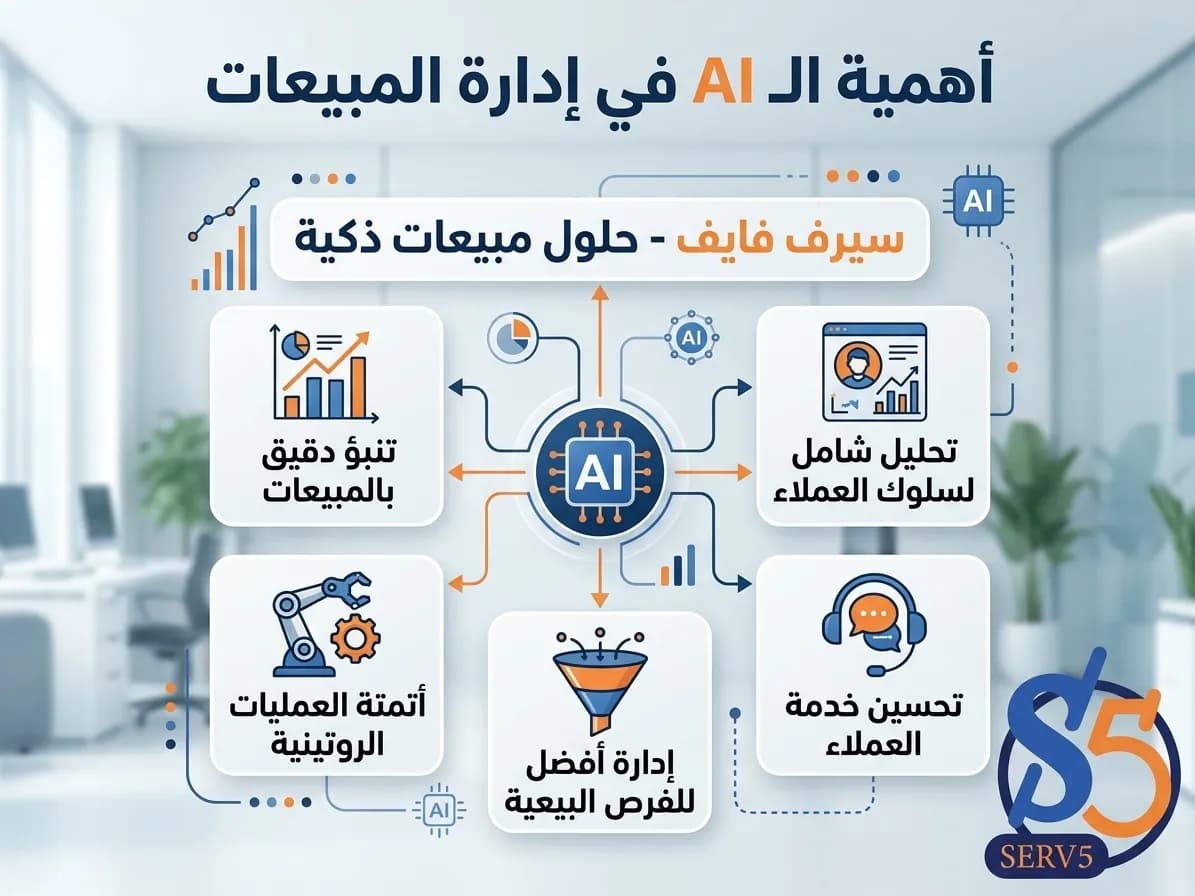
If you are a sales manager in Egypt, you have probably felt the pressure of chasing targets while drowning in spreadsheets and CRM updates. The importance of AI in sales management is no longer a luxury for tech giants; it is becoming a practical tool for any business that wants to forecast accurately, prioritize the right leads, and free up time for actual selling. In the next few minutes, you will see how AI can turn your sales data into clear actions, and you will get a step-by-step roadmap to start using it without overhauling your entire system.
Why AI in Sales Management Matters Now
Sales teams in Egypt often rely on gut feeling when deciding which lead to chase or which deal to discount. That approach worked when the market was small, but today your customers leave digital footprints everywhere—emails, website visits, social media interactions. AI can read these signals and tell you which leads are most likely to buy, which deals are at risk, and what price point might close the sale. Learn more about Serv5 through Home.
The real value is not in replacing your salespeople; it is in giving them superpowers. When your team knows exactly where to spend their energy, they stop wasting hours on cold calls that never convert. This shift can raise your win rate and shorten your sales cycle, two numbers that directly impact revenue.
Three Core Areas Where AI Changes Sales Management
1. Sales Forecasting That Actually Predicts
Traditional forecasting is often a guessing game based on the rep's optimism. AI looks at historical data, seasonal patterns, and current pipeline activity to give you a realistic forecast. Instead of asking 'will we hit the target?', you can ask 'what is the probability we hit it, and what actions will change that probability?'
2. Lead Scoring: Focus on the Right People
Not all leads are equal. AI can score every lead based on how closely they match your best customers and how engaged they are with your content. A lead that opens every email and visits your pricing page three times deserves more attention than one that just subscribed to your newsletter. This ranking helps your team prioritize follow-ups and avoid chasing dead ends.
3. CRM Automation and Data Hygiene
Your sales team probably hates data entry. AI can automatically log calls, update deal stages, and even draft follow-up emails. This keeps your CRM clean and up-to-date without manual effort. Clean data means better analytics, and better analytics means smarter decisions. You can explore the idea further in AI in Sales Management: A Practical Guide for Egyptian Businesses.
How to Start Implementing AI in Sales Management
You do not need a massive budget or a data science team to benefit from AI. Here is a practical roadmap that respects your current tools and resources.
Common Mistakes to Avoid When Adopting AI
Many businesses jump into AI without a clear plan, and they end up frustrated. The first mistake is expecting AI to solve problems that are actually process issues. If your sales stages are poorly defined, AI will only amplify the confusion. Fix your workflow first. For more detail, read Social Media Marketing Mistakes That Drain Your Budget—and How to Fix Them.
The second mistake is ignoring the human side. Your salespeople might resist AI if they feel it is watching them or taking over their job. Involve them in the selection process and explain the benefits clearly. AI is a tool, not a replacement.
Finally, do not rely on AI blindly. Always review its recommendations, especially in the beginning. AI learns from your data, and if your data is biased or incomplete, the recommendations will be too.
The Role of AI in Sales and Marketing Alignment
AI also helps bridge the gap between sales and marketing. Marketing can see which leads actually convert and adjust their targeting, while sales can understand which marketing channels bring in the most qualified prospects. When both teams share the same AI insights, they work toward the same goal: revenue. Digital Marketing can support this implementation stage.
For example, if your marketing team runs a campaign on social media and AI shows that those leads rarely convert, you can shift budget to more effective channels. This kind of data-driven alignment is one of the hidden benefits of AI in sales management.
Measure the Impact: KPIs That Matter
To know if AI is working, track these metrics over time:
These numbers will tell you if your AI investment is paying off or if you need to adjust your approach. A related solution is E-commerce Solutions.
Frequently Asked Questions
What is the first step to use AI in sales management?
Audit your CRM data and clean it up. AI relies on quality data, so removing duplicates and filling missing fields is essential before any tool can give useful insights.
Can AI replace salespeople?
No, AI is a support tool. It automates repetitive tasks and provides insights, but human judgment, empathy, and relationship building remain essential for closing complex deals.
What are the most common AI applications in sales management?
The most common are lead scoring, sales forecasting, CRM automation, and personalized email drafting. These features help prioritize leads, predict revenue, and save time.
How long does it take to see results from AI in sales?
It varies, but many businesses see improvements in 2-3 months. Start with a pilot project, measure KPIs like forecast accuracy and conversion rate, and adjust as needed.
Do I need a data science team to implement AI?
Not necessarily. Many CRM platforms offer built-in AI features that are easy to set up. For custom solutions, you can consult experts like Serv5 to guide you.
Conclusion: Start Small, Think Big
The importance of AI in sales management is clear: it makes your team smarter, your forecasts more accurate, and your customers happier. But you do not have to transform everything overnight. Start with a small pilot project, measure the results, and then expand. If you need guidance on choosing the right tools or integrating AI into your existing CRM, the team at Serv5 can help you build a custom solution that fits your business. Reach out through our contact page and let us help you turn your sales data into growth.
- Audit your data: Look at your CRM and identify what data you already have. AI is only as good as the data it learns from, so start by cleaning up duplicates and filling in missing fields.
- Pick one pain point: Choose a single area where AI can make an immediate impact, such as lead scoring or forecasting. Do not try to automate everything at once. Continue with the practical context in Campaign Management Without Chaos: A Practical Guide for Egyptian Businesses.
- Choose the right tool: Many CRM platforms now have built-in AI features. If you use a popular system like Salesforce or HubSpot, check their AI add-ons first before buying a separate tool.
- Train your team: Introduce the AI tool gradually. Show your reps how it makes their job easier, not harder. Let them see that AI handles tedious tasks, so they can focus on building relationships.
- Measure results: Set clear KPIs before implementation, such as time spent on admin tasks, lead conversion rate, or forecast accuracy. Compare them after 90 days to see the real impact.
- Forecast accuracy: Compare your AI forecast to actual results monthly.
- Lead conversion rate: See if the percentage of leads that become customers improves. For practical delivery, explore Technical Support.
- Sales cycle length: AI should help you close deals faster.
- Time saved on admin: Ask your team how many hours they save weekly on data entry and reporting.