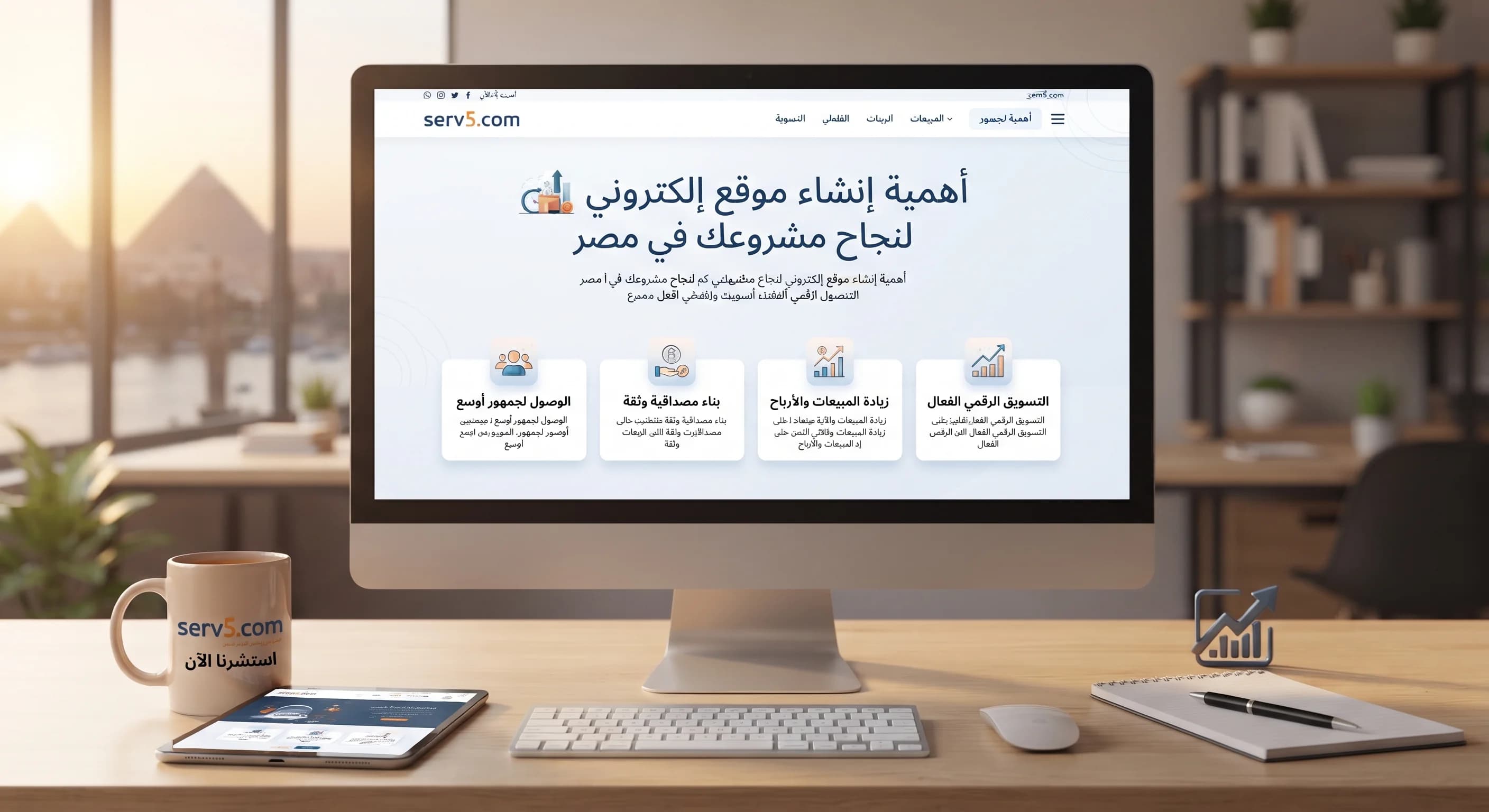
The Importance of Creating a Website: A Practical Guide to Building a Strong Online Presence for Your Business
Before you think about any marketing strategy, ask yourself one question: When someone hears about your business, what's the first thing they'll do? Most likely, they'll open Google and search for your business name or the services you offer.
If your business appears in the search results, you've gained a potential customer. If it doesn't, that customer will likely choose one of your competitors instead.
This is where the importance of having a website becomes clear. A website isn't just an online brochure—it's a complete digital platform that showcases your business, builds credibility, and generates leads around the clock.
In this guide, we'll walk you through the process of building a strong online presence step by step. We'll explain how to make informed decisions about website design, hosting, and digital marketing so your website becomes a profitable investment rather than just another business expense.
Why Is Your Website More Important Than a Facebook Page?
Many business owners rely solely on social media platforms to promote their businesses. However, this is a common mistake.
Your Facebook or Instagram page doesn't truly belong to you. Platform policies and algorithms can change at any time, limiting your reach to potential customers.
A website, on the other hand, is your own digital property. You have complete control over its content, branding, and customer experience.
With your website, you can:
A well-designed website significantly increases customer trust, making visitors more likely to choose your business over competitors.
To learn more about Serv5, visit our Home Page.
The Importance of a Website for Increasing Sales and Reaching More Customers
A website isn't simply an online presence—it's a sales channel that works 24 hours a day.
Even after your office or physical store closes, your website continues attracting visitors, answering their questions, and generating new business opportunities.
In today's competitive market, having a website isn't a luxury—it's a necessity.
When your website is optimized for search engines (SEO), potential customers searching for your services in Egypt can easily find your business.
A website also allows you to expand beyond your local area and reach customers across different cities and regions.
Even more importantly, website analytics enable you to understand visitor behavior:
These insights help you continuously improve your website and marketing strategy.
For more information, read How to Design a Professional Website for Your Business: A Complete Guide from Concept to Launch.
A Real-Life Example: How a Website Transformed a Local Business
Imagine a small furniture manufacturer based in Mansoura.
The company relied mainly on exhibitions, referrals, and word-of-mouth marketing, resulting in limited sales.
After investing in a professional website featuring an online product catalog and ordering system, the business began appearing in Google searches for terms like:
Within just a few months, customer inquiries increased by 70%, and the company successfully expanded into new markets such as Cairo and Alexandria.
This example clearly demonstrates how a professional website can unlock entirely new business opportunities.
Practical Steps to Build a Successful Website
To fully benefit from having a professional website, you need a clear strategy. Not every website delivers great results.
Here are the essential steps:
Define Your Goals
Before you begin, ask yourself:
Your answers will determine the site's structure, features, and functionality.
Choose the Right Domain Name and Hosting
Your domain name should be memorable and relevant to your business.
Reliable hosting is equally important, as it affects:
Choosing quality hosting is one of the foundations of a successful website.
Invest in User Interface (UI) and User Experience (UX)
An attractive design alone isn't enough.
Visitors should be able to find the information they need within seconds.
Professional UI/UX design improves usability, keeps visitors engaged, and increases conversion rates.
Develop High-Quality Content
Content is what attracts visitors from search engines.
Your website should include:
High-quality content builds trust while improving SEO performance.
Connect Analytics and Marketing Tools
Once your website is live, monitor its performance using tools such as Google Analytics.
Analyze visitor behavior and continuously optimize your website based on real data.
Ready-Made Templates or Custom Website Design?
Many business owners struggle with this decision.
Website templates are:
However, they often provide limited customization and may not deliver the best performance on mobile devices.
Custom website design costs more but offers:
If you're planning to grow your business, investing in a custom website from a professional agency like Serv5 is usually the smarter long-term decision.
Technical Essentials You Should Never Ignore
Even the most attractive website can fail if its technical foundation is weak.
Key technical factors include:
Website Speed
Visitors rarely wait more than three seconds for a page to load.
Slow hosting or oversized images can cost you valuable customers.
Mobile Responsiveness
More than 60% of internet browsing in Egypt happens on smartphones.
Your website must provide an excellent experience across all screen sizes.
SSL Certificate and Website Security
An SSL certificate protects customer information while improving your credibility.
Google also favors secure websites in search rankings.
Search Engine Optimization (SEO)
Your website's visibility depends on several SEO factors, including:
If you're unsure how to implement these best practices, working with experienced professionals can save time and improve results.
Serv5 provides web hosting and website development services built according to international standards to ensure strong technical performance.
The Importance of Integrating Your Website with an Online Store
If you plan to sell products online, integrating eCommerce functionality into your website can significantly increase your business opportunities.
An online store allows you to:
Without an eCommerce platform, you'll have to manage customer orders manually, which slows operations and limits sales growth.
Common Website Mistakes and How to Avoid Them
Many websites fail because of simple but costly mistakes.
The most common ones include:
To avoid these issues, work with a professional team that provides complete digital solutions.
At Serv5, we support businesses through every stage of their digital journey—from website design and development to hosting, SEO, and digital marketing.
- Build a strong brand identity.
- Collect customer information and leads.
- Publish valuable content without relying on social media algorithms.
- Showcase your services, pricing, testimonials, and portfolio professionally.
- Which pages receive the most traffic?
- What captures visitors' attention?
- Why do some users leave without contacting you?
- "Home Furniture in Egypt"
- "Modern Bedroom Furniture"
- Is the website informational or an online store?
- Will you be selling products or offering services?
- What actions do you want visitors to take?
- Website speed
- Security
- Reliability
- Overall user experience
- Clear service descriptions
- Informative blog articles
- Persuasive landing pages
- Company information
- Frequently Asked Questions
- Faster to launch
- More affordable
- Suitable for smaller budgets
- A unique brand identity
- Better scalability
- Improved performance
- Greater flexibility
- Higher long-term value
- Site structure
- Keyword optimization
- Internal linking
- Page performance
- Technical SEO
- Display products professionally
- Manage inventory
- Accept online payments
- Integrate with shipping providers
- Deliver a seamless shopping experience
- Ignoring mobile users: A non-responsive website can drive away up to 70% of visitors.
- Weak content: Poor-quality images, unclear copy, or missing information reduce credibility.
- No marketing strategy: Building a website alone isn't enough—you also need SEO, paid advertising, or other digital marketing efforts to attract visitors.
- Overcomplicating the website: Adding unnecessary features can confuse users and slow down your site's performance.